Last updated: November 14, 2026
Quick Answer: Rod storage and rod handling come down to 3 things: support the blank, keep the rod dry, and prevent impact.
Key Takeaways
- Rod storage works when it protects the blank, the guides, and the reel seat.
- Rods should sit straight or lightly supported, with the blank free of side pressure and the tip protected from knocks.
- Space is tighter, so the storage has to do more with less.
- A safe way to handle a fishing rod is to support the blank, avoid sharp bends, and keep the tip clear of doors, ceiling corners, oars, and hooks.
Rod storage and rod handling matter because a bent blank, crushed guides, or a snapped tip usually happens long before a fish ever hits the line. Rod storage and rod handling are simplest when the setup keeps rods straight, dry, easy to reach, and less exposed to failure at the worst moment. In short: store rods so they do not flex, rub, or trap moisture, and handle them so the load stays on the blank, not on the tip or guides.
This guide settles the storage choices, the handling habits that prevent damage, and the mistakes that shorten rod life. For related setup tips, see the fishing gear care guide and how to clean a fishing rod.
What rod storage actually needs to do
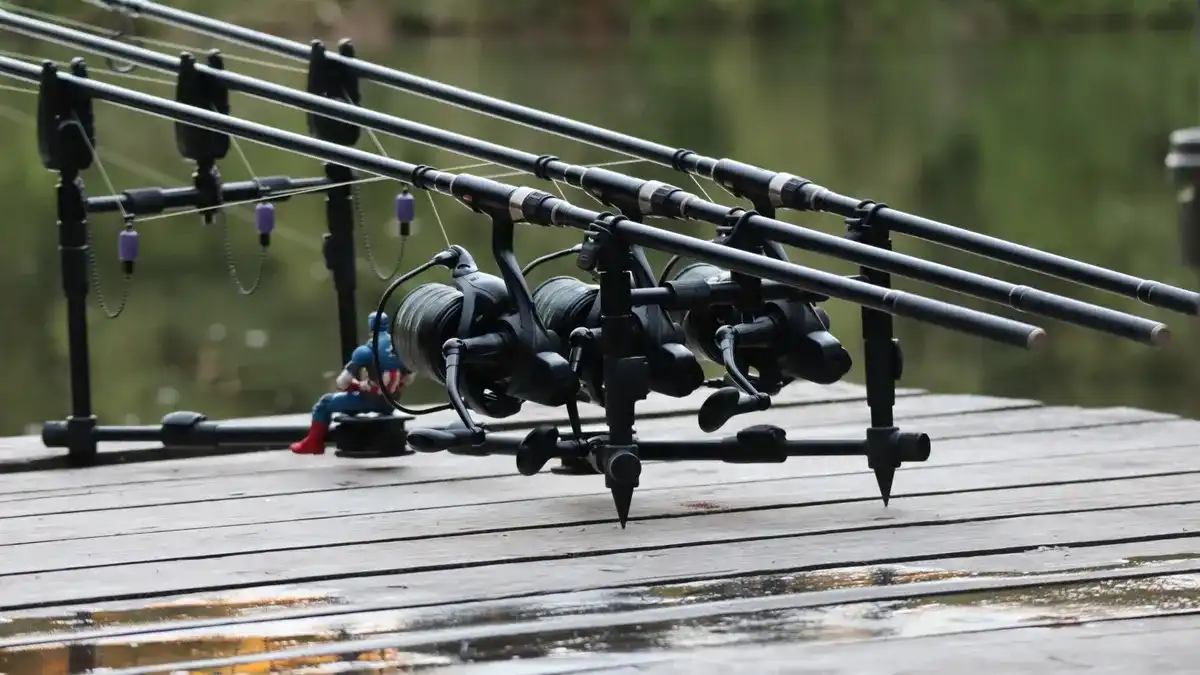
Rod storage works when it protects three things: the blank, the guides, and the reel seat. If any of those are under constant pressure, the rod wears out faster than it should. A storage plan that looks tidy but leaves a rod bent for months is a bad plan.
Picture this: you’ve got three rods in a garage, one on the floor, one jammed behind a door, and one hanging by the tip. You want the one that’s ready next trip, not the one that lost its set from being stored wrong. That is the real job here.
Good rod storage keeps rods straight, separated, and off hard edges.
The best storage systems do four things:
- Hold the rod without crushing the blank
- Keep guides from rubbing against walls, hooks, or other rods
- Prevent the tip from taking load
- Make it easy to grab the right rod without digging through the pile
A rod rack on the wall, ceiling mounts, vertical tubes, or a case can all work. The right choice depends on where the rod lives, how often you fish, and whether the rod stays rigged. For rack ideas, see best fishing rod rack options.
Here’s the catch: the most common storage damage is slow, not dramatic.
It is the constant bend.
How should rods be stored at home?
Rod storage and rod handling at home work best when the blank stays straight or lightly supported and the tip stays protected from knocks. That rule beats almost every clever rack design you’ll see.
Picture this: you come home tired, lean the rod in a corner, and tell yourself you’ll deal with it later. Later turns into a week, then a month. A corner is not storage; it is a damage plan.
Home rod storage should remove pressure, not add it.
The safest home setups usually fall into these categories:
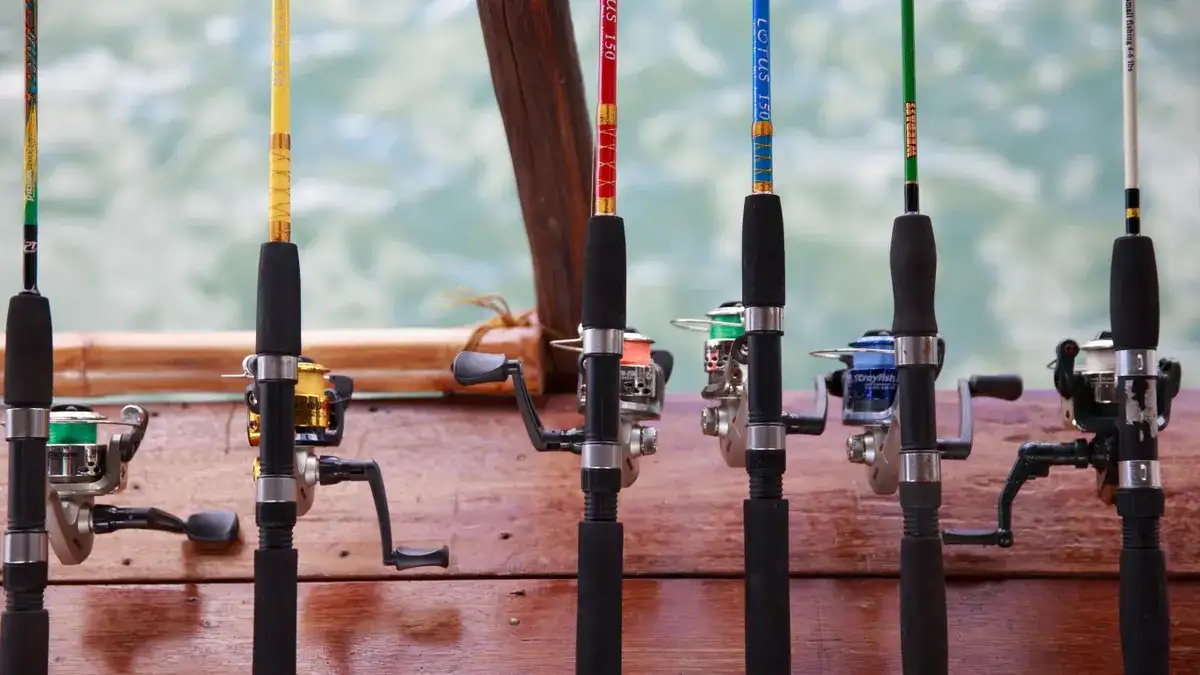
- Horizontal wall racks for rods with reels attached
- Vertical racks or tubes for bare rods or tight spaces
- Ceiling storage for long rods in garages or sheds
- Rod cases for travel, long-term off-season storage, or spare rods
Horizontal storage is often the easiest on a rod because it spreads the weight and avoids a hard bend. Vertical storage saves floor space, but the tip should not sit on the ground or rub on a rough edge. If the rod stays rigged, make sure the line is not pulling the tip off center.
A few home-storage rules matter more than the rack style:
- Do not hang a rod from the tip alone
- Do not press the blank against a sharp lip or screw head
- Do not store a wet rod in a closed tube for days
- Do not let leaders, lures, or hooks dangle against another rod
If you store rods with reels attached, leave enough space between them so the reel handles do not beat against each other. If you store them bare, cap or cover the tip section where possible. Even a simple rod sock helps keep guides from snagging.
The best part? A clean rack is easier to use, so you actually keep the rods where they belong.
Rod storage for kayaks and small boats: what changes?

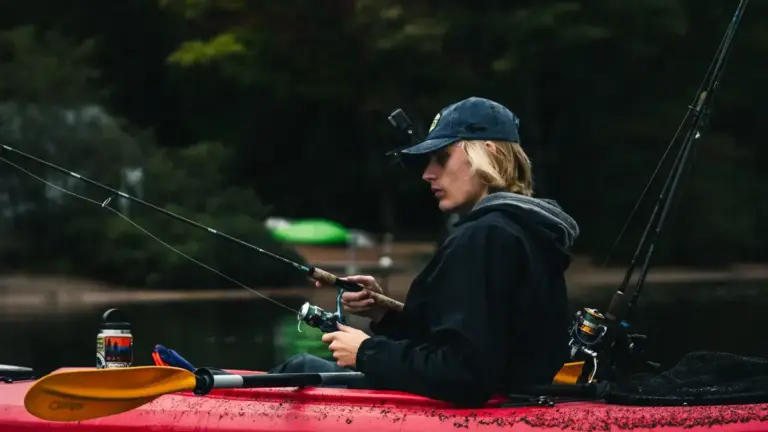
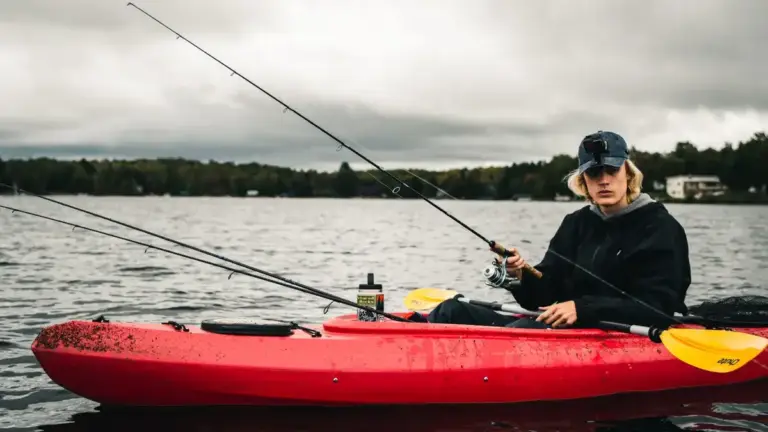
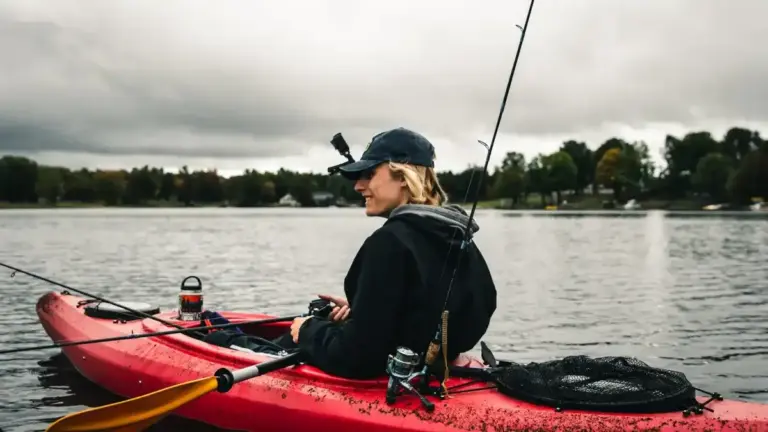
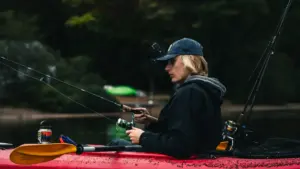
Rod storage on a kayak or small boat should keep the rod close, secure, and free of snag points, because a loose rod can become a loss, a tangle, or a hazard in a few seconds. Space is tighter, so the storage has to do more with less. For kayak and small-boat rigging, check the manufacturer’s guidance and, if needed, ask a qualified marine outfitter before adding hardware.
Picture this: you’re paddling, the deck shifts, and the rod you set down slides into foot space or catches a leash. Now the rod is in the way, and every movement makes the problem worse. Small boats punish sloppy storage fast.
On a kayak, secure rod storage beats pretty storage every time.
For boat and kayak use, the main options are:
- Horizontal deck storage for rods that are being used soon
- Flush-mounted holders for transport and staging
- Side-mounted holders when you need the rod out of the way
- Tethered storage if there’s any chance a rod can slide overboard
A rod lying loose on deck is asking for a stepped-on tip, a cracked guide, or a hook in the wrong place. Even in calm water, a loose rod shifts when you paddle, turn, or land a fish. If a rod is rigged, the hook needs a place to live. That means a secure lure keeper, a foam point, or a rigging plan that keeps metal off bare fiberglass and graphite.
Here’s what matters most on small craft:
- Keep the tip from pointing at anything hard
- Keep the handle from rolling under your seat or feet
- Keep line free from steering, rudder, pedal drive, and paddle movement
- Keep rods separated so guides and reels do not collide
A kayak rod storage setup should also respect the landing sequence. If you need to grab the rod fast, the holder should let you lift it in one motion. If you need to stow it fast, the holder should accept the rod without a fight. A setup that looks secure but slows every rod change is not a good setup. See also kayak fishing setup tips.
Now, you might be wondering about leashes.
Use them when losing the rod is worse than the extra clutter, but keep the leash short enough that it cannot wrap around feet, pedals, or line.
What’s the safest way to handle a fishing rod?
A safe way to handle a fishing rod is to support the blank, avoid sharp bends, and keep the tip clear of doors, ceiling corners, oars, and hooks. Most rod damage comes from force applied in the wrong place, not from normal fishing pressure. For line and hook safety, see the CDC guidance on fishhook injuries.
Picture this: you grab the rod by the tip section, swing it through a doorway, and the guide ring clips the frame. That tiny hit can start a crack or bend a guide foot. Rods are strong in line, weak against careless angles.
Handle the blank, not the tip.
The basics are simple:
- Hold the rod by the handle or reel seat when moving it
- Keep the rod pointed where you can see the path
- Lift the tip before turning through a door, truck bed, or hatch
- Never grab a rod and drag it sideways out of a tight rack
When you assemble or break down a multi-piece rod, align the guides carefully and seat the ferrule fully. A loose ferrule can twist under load, and a ferrule that is jammed too hard can be miserable to separate later. If a section is marked, align the marks first, then confirm the guides still track straight.
The hand that holds the line matters too. If you pinch braid or mono under load, keep fingers clear of the reel handle and avoid wrapping line around skin. Fishing line can cut fast. The safer move is to control tension with the rod and reel, not with bare fingers. The American Academy of Orthopaedic Surgeons also notes that fishing injuries are often preventable with basic handling care.
A few handling habits save rods and knuckles:
- Do not point a rod tip at other people
- Do not high-stick a fish if you can avoid it
- Do not swing a lure like a pendulum near gear or faces
- Do not lift a rod by the line or lure
The truth is, rod handling gets sloppy when the fish is moving fast. That is exactly when the rod needs the most care.
How do you transport rods without damaging them?
Rod storage and rod handling during transport should use a tube, rack, or secured case that prevents bending, impact, and vibration. The goal is simple: nothing should be able to slam into the blank, crush the guides, or snap the tip when the vehicle turns or brakes.
Picture this: the rods are in the truck bed, the tailgate bounces, and the tip section ends up under a cooler or dry bag. A short drive can do real harm if the rods are not tied down. Road vibration is sneaky.
Transport damage usually comes from movement, not from miles.
Common transport methods include:
- Hard tubes for maximum protection
- Soft rod cases for padded storage and easier carrying
- Vehicle racks for quick access and long rods
- Interior carry for short rods and clean, dry trips
Hard tubes protect best, but they take more space and can be awkward with rods already rigged. Soft cases are easier to live with and often fine for routine travel if the rod sections do not bang into each other inside the bag. Vehicle racks are convenient, but the rods need to be locked in place so they do not bounce.
Pay attention to three transport risks:
- Compression from tie-downs or packed gear
- Impact from doors, lids, and cargo shifts
- Heat inside a vehicle, which can soften some adhesives and finish materials over time
A rod that rides in a hot vehicle for long stretches should not be left pressed against a windshield, dashboard, or metal rack bar. If you store rods in the car between trips, keep them out of direct sun and away from anything that can pinch the blank.
If you fish from a kayak and also drive to launch sites, transport is where many damage patterns start. A rod can be perfectly stored at home and still fail because of one bad drive.
On the flip side,
A boring transport setup is usually the best one.
Which storage materials and rack styles hold up best?
Rod storage hardware should be stiff, smooth, and non-marring, with enough padding or clearance that the blank never rubs hard plastic or bare metal. That matters more than brand polish or fancy finish.
Picture this: you buy a rack because it looks clean, then notice the rods get a shiny wear spot where the blank meets the holder. That wear spot is a warning, not a cosmetic issue.
The contact surface matters more than the frame.
Good rack materials and contact points usually include:
- Foam-lined cradles for gentle support
- Rubber or soft polymer inserts where the rod sits
- Powder-coated or painted frames that resist corrosion better than bare metal
- Plastic tubes or sleeves for vertical storage and transport
Bad materials usually show up as rough edges, sharp screw heads, or hard ribs that dig into the rod blank. If the holder clamps the rod, it should hold with just enough tension to stay put. Too much pressure can leave dents, especially on thin blanks.
For kayak and garage use, the frame itself should also resist water, salt, and sun. A wet rod put into a rack with rusting hardware becomes a dirty rod fast. In saltwater use, rinse the rod and the rack contact points if they collect spray.
What to watch for in any rack:
- Exposed fasteners near the blank
- Narrow slots that pinch guides
- Cheap foam that compresses flat and stops protecting
- Mounting that wobbles under load
A rack can look tough and still be a bad home for a rod. The rod does not care about the frame’s color. It cares about where the pressure lands.
What are the mistakes that shorten rod life the fastest?
The fastest way to ruin a rod is to load the tip, crush the blank, or store it wet and dirty. Most of the damage is avoidable, which is why it is so frustrating when it happens.
Picture this: you finish a muddy outing, toss the rod into a damp bag, and forget about it until the next weekend. The guides corrode, the grip smells off, and grit works into the reel seat. That is avoidable wear.
The usual mistakes are small and repeated.
The worst habits are easy to name:
- Leaving a rod bent in a corner
- Storing a wet rod in a closed case
- Hanging a rod from the tip
- Cranking the rod into a too-tight rack
- Letting hooks or jig heads swing against the blank
- Dragging assembled rods through doors or car trunks
- Stacking rods so the guides rub together
Some damage is obvious, like a snapped tip. Some is slow, like guide grooving or reel seat wear. Saltwater speeds up the damage if the rod is not rinsed and dried. Sand does too. A grain of grit under a reel seat can chew at fittings long after the trip ends.
A quick post-trip routine helps:
- Wipe the blank and handle clean
- Check guides for cracks or bent frames
- Dry the rod before capping or bagging it
- Store hooks so they cannot strike the blank
- Put the rod back where it belongs, not where it lands
A rod that is cared for after each trip lasts longer and performs better on the next one. That is not fancy advice. It is just the difference between gear that gets used and gear that gets replaced. For a deeper checklist, see how to maintain fishing gear.
How do you choose the right rod storage setup for your space?
The right setup is the one that matches your space, how often you fish, and whether the rods stay rigged. If you fish weekly and need quick access, a wall rack or boat-ready holder makes sense. If you fish seasonally, a case or tube may be better.
Picture this: you have a narrow garage, two kayaks, and rods of different lengths. A wide rack that works in a tackle room may be useless in that space. The best storage is the one that fits the room you actually have.
Fit beats theory.
Use this simple guide:
- Small space: vertical tube or narrow wall rack
- Shared garage: wall-mounted horizontal rack
- Travel-heavy setup: soft case or hard tube
- Rigged-rods daily use: accessible horizontal rack or boat holder
- Off-season storage: dry, covered case with no side pressure
Think about rod length too. A long surf rod can be awkward in a short hallway. A short kayak rod may be fine in a vertical holder, but a long heavy rod may sag if it is supported poorly. Reels attached? Then spacing matters. Bare rods? Then section protection matters more.
A good setup also respects the rest of the gear around it. Rods should not share a tight space with paddles, gaffs, nets, or sharp tackle boxes unless there is a divider. It is easy to save a few inches and lose a rod tip.
The decision rule is plain:
- If the rod lives in the garage, protect it from impact.
- If the rod lives on the kayak, protect it from movement.
- If the rod lives in the truck, protect it from compression and heat.
What should a beginner do first?
A beginner should start with one clean, dry storage method and one simple handling rule: never bend the rod harder than the fish or the space requires. Fancy systems come later. The first goal is to stop avoidable damage.
Picture this: you only own two rods, and both are useful. You do not need a full wall system on day one. You need a place where the rods will not get stepped on, leaned on, or left wet.
Start simple, then upgrade.
A practical beginner setup looks like this:
- One rack, tube, or case that fits the longest rod
- One dry place away from doors and foot traffic
- One habit of wiping and checking the rod after each trip
- One rule: carry the rod by the handle, not the tip
If you fish from a kayak, add a holder or strap that keeps the rod from sliding during launch and landing. If you fish from shore, protect the rod during transport first. If you fish from a boat, make sure the rod has a clear landing spot and a safe home when not in use.
A beginner does not need to master every storage style. They need to avoid the three mistakes that break rods most often: bending, banging, and leaving them wet. Those are enough to cover most of the risk.
FAQ
Should rods be stored with reels on or off?
Rods can be stored either way, but the safest choice depends on the space and the rack. If reels stay on, make sure the rod rests without pressure on the reel handle or spool. If reels come off, the rod is lighter and easier to place in a case or tube, which can help in tight rod storage and rod handling setups.
Is it bad to keep a rod in a vertical tube?
A vertical tube is fine if the rod is dry, the tip is protected, and the blank is not wedged tight against the wall of the tube. The problem is not vertical storage itself. The problem is moisture, trapped grit, or a tube that leaves the rod floating around loose.
How do I keep rods from tangling during storage?
Keep rods separated by guides and handles, and secure any loose line or lure. If rods are stored close together, the biggest tangle source is dangling terminal tackle. A hook keeper, lure wrap, or simple band around the lure helps stop one rod from grabbing another.
Can I leave rods rigged between trips?
Yes, but only if the rod is stored dry and the rigged lure or hook cannot damage the blank, guides, or nearby gear. A rigged rod should not sit in a tight case where the line is under tension or the hook is free to swing. If the setup forces a bend, break it down.
What’s the biggest rod handling mistake?
The biggest mistake is loading the tip or blank in a tight angle, especially when moving through doors, hatches, or boat clutter. That is where rods get cracked, guides get bent, and ferrules get stressed. A careful grip near the handle prevents most of that damage.
The bottom line
Rod storage and rod handling are about keeping the blank straight, the guides clear, and the rod easy to move without force. The best system is the one that fits your room, your boat, and your routine. If it prevents bending, rubbing, and moisture, it is doing the job. If it creates pressure points or extra clutter, it is not.
Choose a storage method that keeps rods dry and separated. Handle each rod by the handle or reel seat. Protect the tip on every move. Those three habits do more for rod life than any expensive rack ever will.
Drafted with AI; not yet reviewed by a person.