Wide balloon-style or sand-tread wheels roll over loose, dry sand without sinking; narrower standard wheels work better on packed trails, grass, and boat ramps. The difference comes down to contact patch — wider wheels spread a cart’s weight over more sand so they stay on top instead of digging in. Match your wheels to the terrain below instead of picking by price or brand name alone.
- Wide, balloon-style wheels (roughly 13-inch diameter, confirmed on Wilderness Systems’ own cart page) spread weight over more sand and roll without sinking.
- RAILBLAZA’s SandTrakz wheels use a soft compression zone that reduces sink on beaches, mud flats, and riverbanks, per the manufacturer’s own description.
- Standard, narrower wheels track straighter and roll faster on firm ground — grass, dirt trails, gravel, and paved boat ramps — but they’re more likely to sink in loose sand.
- Load capacity matters as much as wheel width: Wilderness Systems rates its 13-inch beach-wheel cart to 330 lbs, while RAILBLAZA’s SandTrakz cart is rated to 170 lbs static load.
- Use the terrain table below to pick the wheel type for the ground you’ll actually be crossing, not just the launch point.
Why Does Wheel Width Matter on Sand?
A cart wheel’s job is to carry the kayak’s weight across the ground without sinking. On firm ground, a narrow wheel does this fine because the surface itself resists the load. Loose, dry sand doesn’t resist the same way — it gives under pressure, and a narrow wheel concentrates the cart’s full weight onto a small contact patch, which is exactly what makes it sink.
A wider wheel spreads that same weight over more surface area, so each square inch of sand bears less pressure. Wilderness Systems’ Heavy-Duty Kayak Cart with 13-inch beach wheels is built around this idea: the manufacturer describes the wheels as large and balloon-style, rated to carry kayaks and gear up to 330 lbs, and states they “roll over almost any terrain, including sand.”
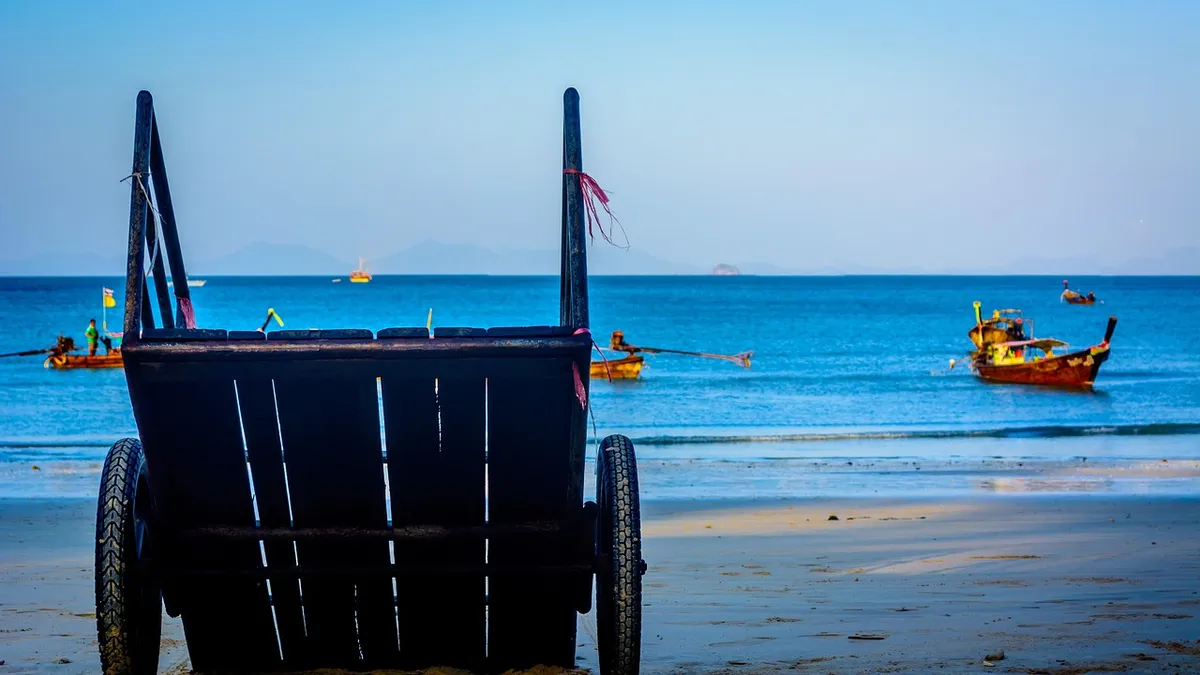
RAILBLAZA takes a related but different approach with its SandTrakz wheels on the C-Tug cart. Instead of relying only on diameter, the manufacturer describes a “soft outer compression zone that spreads the load and reduces sink,” letting the cart cross “beaches, mud flats, and riverbanks without digging in or bogging down.” The company also says this design helps reduce the pull effort needed to drag the cart, though it doesn’t publish an exact percentage for that reduction, so treat it as a meaningful but unquantified improvement rather than a hard number. For how a cart wheel decision fits into your broader gear list, see the kayak fishing accessories buying guide.
Terrain Decision Table
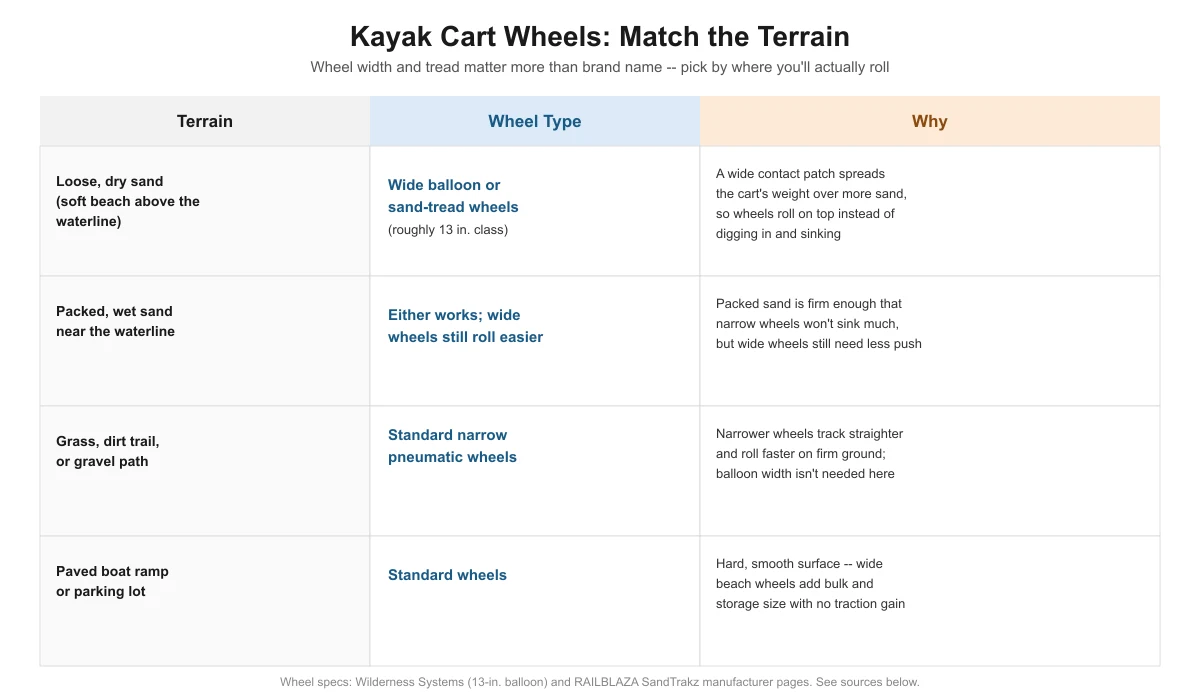
Match the ground you’ll actually be rolling across — not just where you park — to the wheel type below. Most anglers cross more than one terrain type between the car and the water, so read the whole table before deciding.
| Terrain | Wheel Type | Why |
|---|---|---|
| Loose, dry sand (soft beach above the waterline) | Wide balloon or sand-tread wheels (roughly 13-inch class) | A wide contact patch spreads the cart’s weight over more sand, so wheels roll on top instead of digging in and sinking. |
| Packed, wet sand near the waterline | Either works; wide wheels still roll easier | Packed sand is firm enough that narrow wheels won’t sink much, but wide wheels still need less push to move. |
| Grass, dirt trail, or gravel path | Standard narrow pneumatic wheels | Narrower wheels track straighter and roll faster on firm ground; balloon width isn’t needed here. |
| Paved boat ramp or parking lot | Standard wheels | A hard, smooth surface gives wide beach wheels no traction benefit, while adding bulk and storage size. |

What About Standard Wheels?
No single manufacturer source gives an exact width or diameter figure for a “standard” kayak cart wheel to compare directly against the 13-inch balloon figure above, since standard wheels vary more by brand. In general, they’re narrower pneumatic or semi-pneumatic wheels built for packed trails, pavement, and boat ramps — firm surfaces where a narrow wheel’s lower rolling resistance is an advantage rather than a liability.
The tradeoff runs the other way on sand: a standard wheel that rolls efficiently on a paved ramp is exactly the shape that digs in on loose sand, because its narrow profile concentrates weight instead of spreading it. That’s the core reason terrain, not brand reputation, should drive the wheel choice.

What Else to Check Before You Buy
- Load capacity. Match the cart’s rated capacity to your kayak and gear’s total weight with room to spare — Wilderness Systems rates its 13-inch beach-wheel cart to 330 lbs, while RAILBLAZA’s SandTrakz-equipped C-Tug is rated to 170 lbs static load, with the manufacturer noting dynamic capacity varies by terrain.
- Puncture risk and maintenance. Pneumatic (air-filled) wheels can go flat and need occasional inflation checks. RAILBLAZA markets its SandTrakz wheels as needing no puncture repair or inflation maintenance, since they don’t rely on air pressure the way a standard pneumatic tire does.
- Frame material near saltwater. If you launch in saltwater regularly, check whether the cart frame is rated for saltwater use or needs a fresh-water rinse after each trip to limit corrosion — this is general maintenance practice, not a specific manufacturer claim.
- Folding and storage size. Wider wheels take up more room in a vehicle or kayak hatch than standard wheels, which matters if you’re tight on storage space.
Once the cart gets your kayak to the water, what rides on deck is a separate buying decision. See tackle crate vs. tackle bag for kayak fishing for how to choose storage that fits your tank well.
Frequently Asked Questions
Do I need special wheels just for a little bit of loose sand?
If it’s a short stretch, standard wheels may get you through with extra pushing effort. For regular launches across soft, dry sand, wide balloon-style or sand-tread wheels roll with noticeably less resistance, since their wider contact patch keeps them from sinking in.
Will balloon wheels still work fine on a paved boat ramp?
Yes, balloon wheels roll on pavement without issue — they just don’t offer any extra benefit there, and their larger size takes up more storage space than a standard wheel would for the same job.
How much weight can a kayak cart with sand-capable wheels hold?
It depends on the specific cart. Wilderness Systems rates its 13-inch beach-wheel cart to 330 lbs of kayak and gear, while RAILBLAZA’s SandTrakz-equipped C-Tug carries a 170-lb static load rating, with the manufacturer noting that dynamic capacity varies by terrain. Check the specific product’s rating before loading it up.
Do balloon-style wheels need to be inflated?
Some do and some don’t. Traditional pneumatic balloon wheels hold air and can need inflation. RAILBLAZA’s SandTrakz wheels are built with a different compression-zone design that the manufacturer markets as not requiring puncture repair or inflation maintenance — check the specific wheel type before assuming either way.
Is a wider wheel always better than a standard one?
No. Wide wheels help most specifically on loose sand. On grass, dirt trails, gravel, or pavement, standard narrower wheels roll faster, track straighter, and take up less storage space, with no real downside compared to a wider wheel on that kind of ground.
Sources
- Wilderness Systems / Confluence Outdoor, Heavy-Duty Kayak Cart with 13″ Beach Wheels product page (wheel size, balloon-style design, load capacity, sand performance)
- RAILBLAZA, C-Tug with SandTrakz Wheels product page (compression-zone wheel design, terrain performance, static load capacity)
By kayakfishingaccessories.net Editorial Team. Last updated: November 13, 2026.