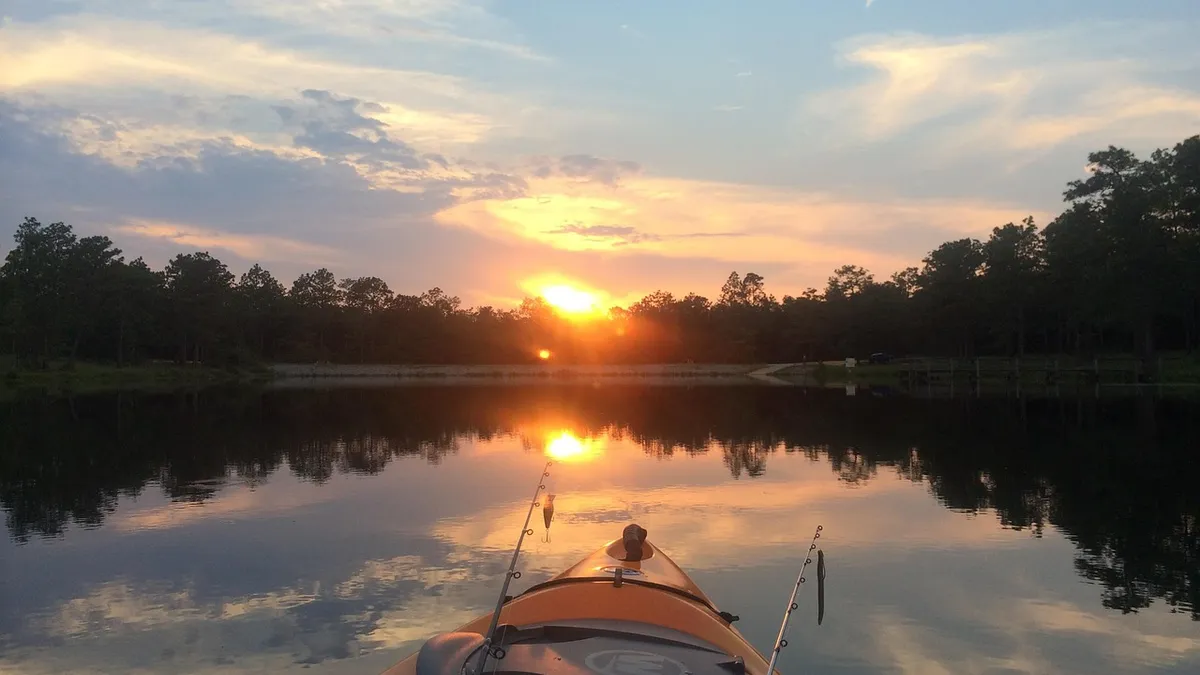
Buy kayak fishing accessories in stages, not as a random list. Start with safety and rod control (a PFD built for kayak fishing, rod holders, a paddle leash if your water calls for one), then positioning and anchoring, then storage, transport, and fish-finding gear — adjusted for whether you paddle a sit-on-top, sit-in, or pedal-drive kayak.
Key takeaways
- “Best accessories” lists rank products by category. They do not tell you which category to buy first, second, or last — that is what this guide adds.
- Three buying stages cover almost every kayak angler: safety and rod control, then positioning and anchoring, then storage, transport, and fish-finding.
- Your kayak’s hull type changes some of the specific choices within each stage, especially for fish-finder mounting and cart wheels.
- Each stage links to a full buying-criteria guide below, so you can go deep on the one decision in front of you right now.
- This build order is this site’s own organizing framework. No manufacturer or expert ranks accessory purchases this way — it is practical reasoning, not a cited statistic.
Why “best kayak fishing accessories” lists don’t help you buy in order
Search for kayak fishing accessories and you mostly get the same thing: a list of ten or twenty products grouped loosely by category, often sorted by price or popularity rather than by what you actually need first. That works if you already know what you’re missing. It doesn’t work if you’re starting from an empty kayak and a box of fishing tackle, trying to figure out where your money should go this month versus next season.
The question that actually matters isn’t “what’s the best rod holder” — it’s “do I need a rod holder before I need an anchor trolley, and does that change if I fish a sit-on-top instead of a sit-in kayak?” That’s the gap this guide fills.
The build order: three buying stages
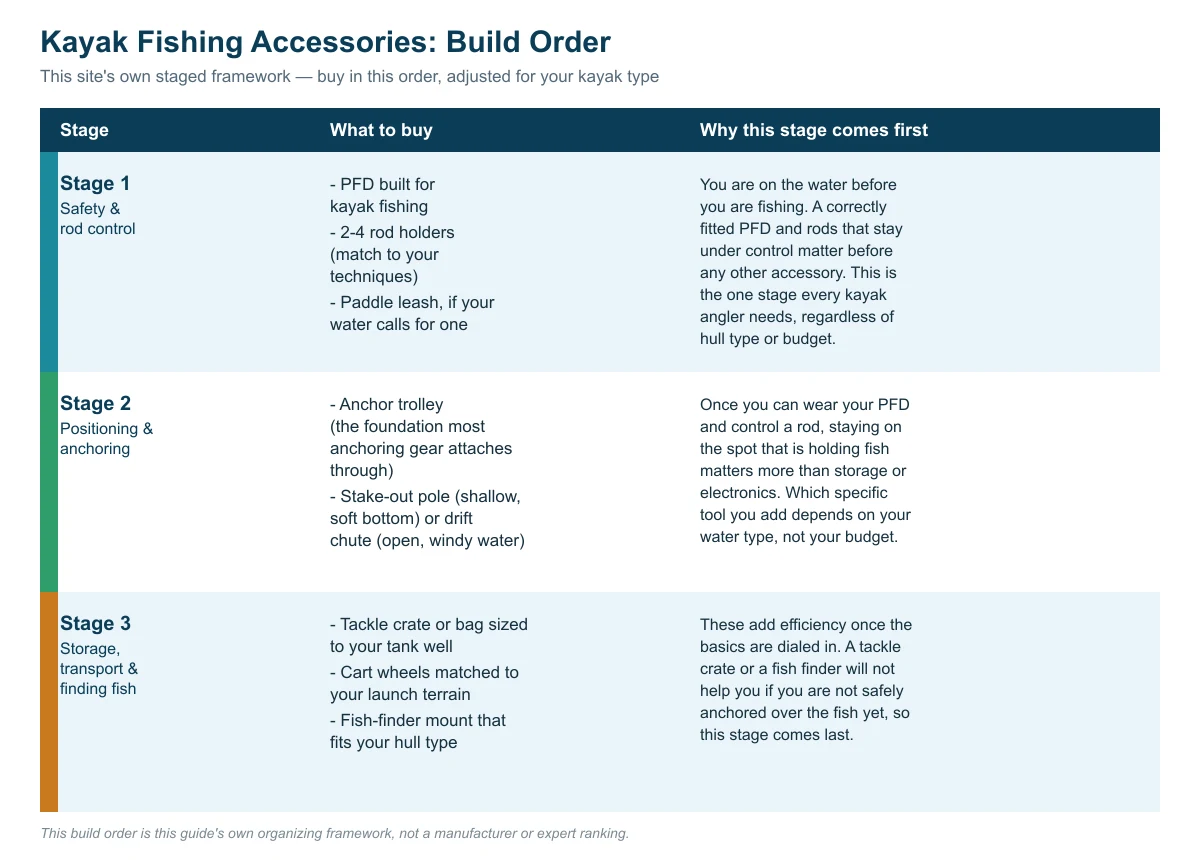
Three stages cover the accessory decisions almost every kayak angler faces, in the order they usually matter most. The table below is this guide’s own framework for organizing the decision, not a ranking published by any manufacturer or expert.
| Stage | What to buy | Why this stage comes first |
|---|---|---|
| Stage 1 — Safety & rod control | A PFD built for kayak fishing; 2–4 rod holders matched to your techniques; a paddle leash if your water calls for one | You’re on the water before you’re fishing. Flotation and rod control matter regardless of hull type or budget. |
| Stage 2 — Positioning & anchoring | An anchor trolley as the foundation, plus a stake-out pole (shallow, soft bottom) or a drift chute (open, windy water) | Once you’re safely equipped, staying on the spot that’s holding fish matters more than storage or electronics. |
| Stage 3 — Storage, transport & finding fish | A tackle crate or bag sized to your tank well; cart wheels matched to your launch terrain; a fish-finder mount suited to your hull | These add efficiency once the basics are dialed in. They don’t help if you’re not safely anchored over fish yet. |
Stage 1: safety and rod control
Everything else in this guide assumes you’re already wearing the right flotation and can keep a rod under control while you paddle. Skip this stage and every later purchase is working around a gap instead of building on a foundation.
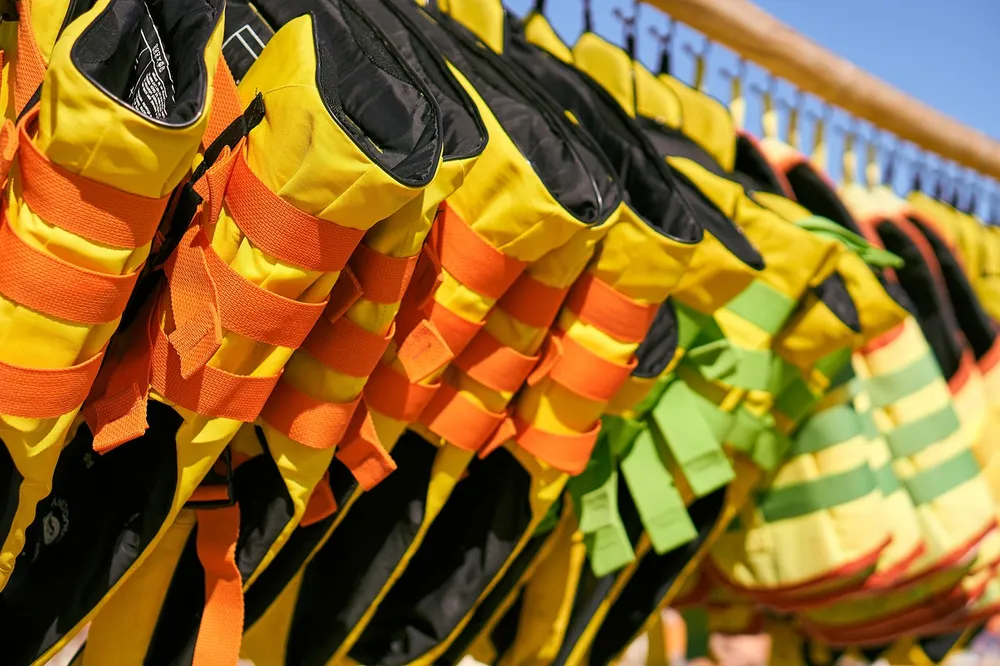
A PFD made for kayak fishing differs from a general-purpose PFD mainly in back-panel cut (so it doesn’t push you forward against a kayak seatback) and in pocket and rod-leash-loop placement — not in flotation rating. See PFD for Kayak Fishing vs a Regular PFD: What’s Actually Different for the full comparison and the U.S. Coast Guard classifications behind it.
Rod holders come next because loose rods roll around the cockpit, snag lines, and get knocked overboard. Two buying decisions matter here: which holder design fits your kayak, and how many you actually need. Start with Flush Mount vs Adjustable Rod Holders: Which Does Your Kayak Need?, then size the count with How Many Rod Holders Do You Actually Need on a Fishing Kayak?
A paddle leash is situational, not universal. It helps on calm or open windy water where a dropped paddle could drift away, but it introduces an entanglement risk in moving current. See Do You Need a Paddle Leash for Kayak Fishing? before you decide either way.
Stage 2: positioning and anchoring
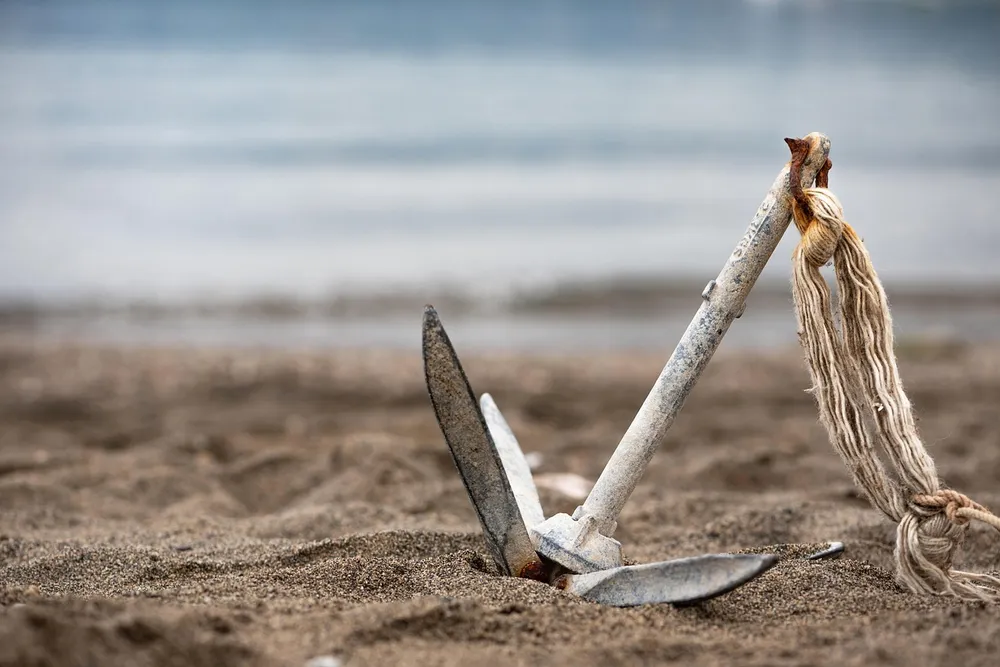
Once you can wear your PFD and control a rod, the next limit on your fishing is whether you can stay put over the spot holding fish. An anchor trolley is the foundation of this stage: it’s a line-management system that lets you run an anchor line along the side of the kayak and adjust the anchor angle without repositioning the whole boat, and most other anchoring accessories attach through it.
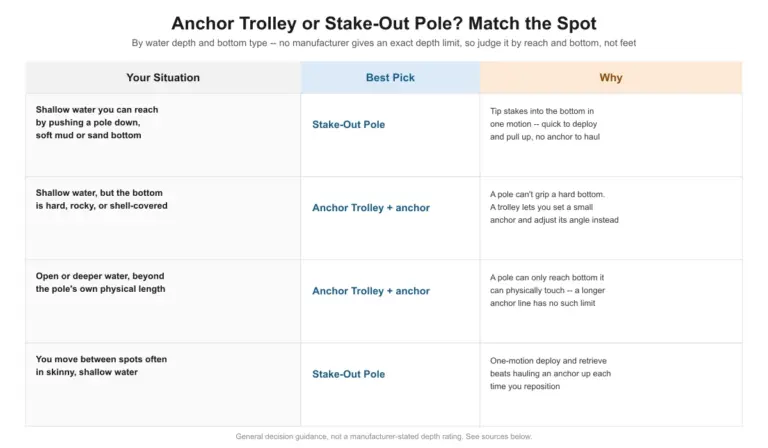
Which specific tool you add to the trolley depends on your water, not your budget. A stake-out pole suits shallow water with a soft bottom you can stake into; a drift chute suits open or windy water where a pole can’t reach bottom. Compare them at Anchor Trolley or Stake-Out Pole: Which Does Your Kayak Fishing Spot Need? and Anchor Trolley vs Drift Chute for Kayak Fishing: Do You Need Both? — the second guide also covers why the two are usually complementary rather than either/or.
Stage 3: storage, transport, and finding fish
These accessories add efficiency once the first two stages are covered. A tackle crate or bag keeps lures and tools organized in your tank well — the right choice depends on your tank-well size and how much saltwater exposure your gear sees; see Tackle Crate vs Tackle Bag for Kayak Fishing: Which Fits Your Setup.
Getting the kayak from your vehicle to the water matters more than most anglers plan for, especially on soft terrain. Kayak Cart Wheels for Sand: Balloon vs Standard, by Terrain breaks down which wheel style matches loose sand, packed sand, grass, or a boat ramp.
A fish finder is the last piece for most anglers, and your hull type decides which mounting options are even on the table before you buy anything. Kayak Fish Finder Transducer Mounts: Which Type Fits Your Kayak covers the compatibility table by hull type.
Does your kayak type change the build order?
The three stages stay the same regardless of hull type, but a few specific choices inside each stage do shift:
- Sit-on-top kayaks with scupper holes have the most mounting flexibility — scupper mounts for a fish finder, standard rod holder bases, and room for an accessory-track mounting system along most of the gunnel. YakAttack’s own GearTrac product page describes its track as “fully configurable” for mounting rod holders, paddle holders, and similar accessories without separate drilled holes for each one — which is why checking track compatibility once can save you from re-drilling for every accessory you add later.
- Sit-in kayaks have no scupper holes to use for a transducer, so a clamp-on arm mount or an in-hull mount (on compatible hull materials) usually replaces the scupper option.
- Pedal-drive kayaks often have fewer scuppers near the stern because of the drive-unit cutout, which pushes fish-finder mounting toward a clamp-on arm or a through-hull mount placed away from the drive well.
The fish-finder guide above has the full compatibility table if electronics are part of your Stage 3 plan.
Frequently asked questions
Do I need all ten of these accessories to start kayak fishing?
No. Stage 1 (PFD and at least one or two rod holders) covers the minimum most anglers need to fish safely and keep a rod under control. Stages 2 and 3 can wait until you know what your local water and budget actually require.
What’s the single most important accessory to buy first?
A properly fitted PFD built for kayak fishing. It’s the one item in this guide tied directly to on-water safety rather than convenience or efficiency.
Should I buy a fish finder before an anchor trolley?
Generally no, by this guide’s build order. A fish finder can show you where fish are, but an anchor trolley and a positioning tool are what let you actually stay on that spot once you find it.
Does this build order apply to inflatable kayaks too?
Mostly, with one exception: inflatable hulls can’t be drilled for a through-hull transducer mount and don’t have rigid scupper holes, so a clamp-on arm mount is usually the only practical fish-finder option. See the fish-finder guide’s hull-type table for the full breakdown.
I already own some of these accessories. How do I use this guide?
Find the stage your gear gaps fall into, then open that stage’s linked guide for the specific buying decision (which type, not just whether to buy). The stages are a planning order, not a rule that you must own everything in Stage 1 before touching Stage 2.
Sources
- U.S. Coast Guard, Life Jacket Wear — basis for treating PFD fit and wear as the first safety-critical purchase in Stage 1.
- YakAttack, GT90 GearTrac product page (manufacturer product page) — basis for the accessory-track mounting note in the hull-type section above.
kayakfishingaccessories.net Editorial Team. Last updated: November 13, 2026.



One thought on “Kayak Fishing Accessories Buying Guide (Not a Gear List)”