Last updated: November 14, 2026
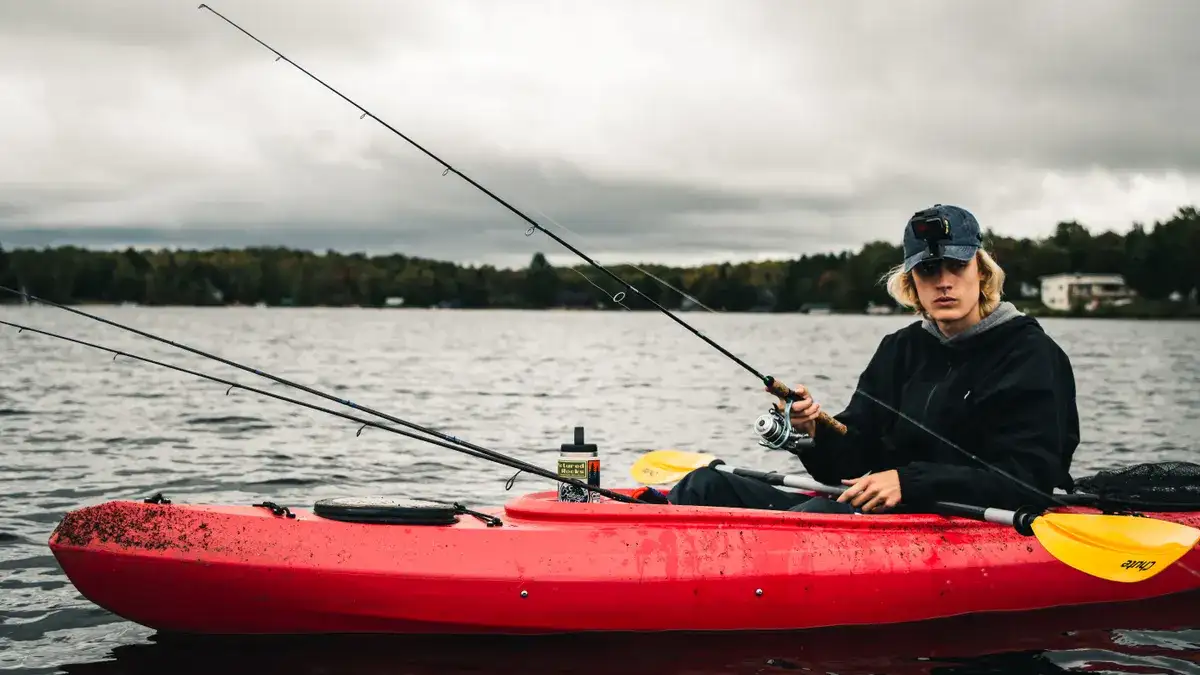
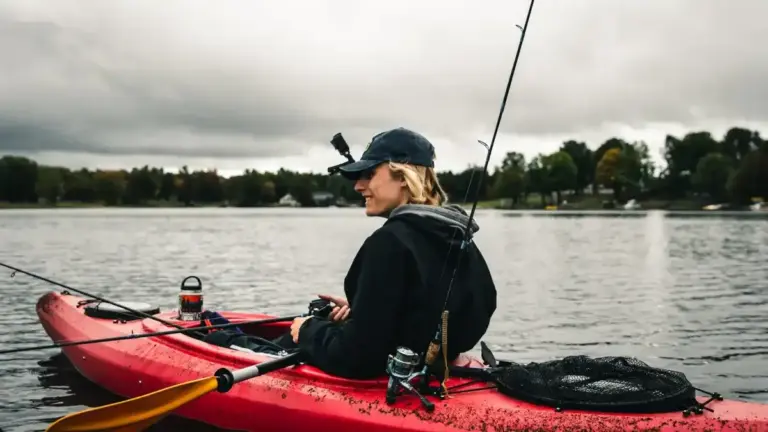
Quick answer: for where to mount kayak rod holders for balance and access, start within arm’s reach of the seat, usually just behind or beside it. That keeps the rod reachable, helps protect paddle clearance, and keeps added weight near the kayak’s centerline. The sections below cover balance, reach, right- or left-hand access, and the clearance traps that ruin a clean setup.
Key Takeaways
- Keep rod holders close to the seat and easy to reach.
- Aim for a reach you can hit without leaving the seat back.
- Place the weight near the kayak’s centerline and by the seat.
- Choose the side that clears your paddle stroke, not just your dominant hand.
Where should kayak rod holders go on the boat?
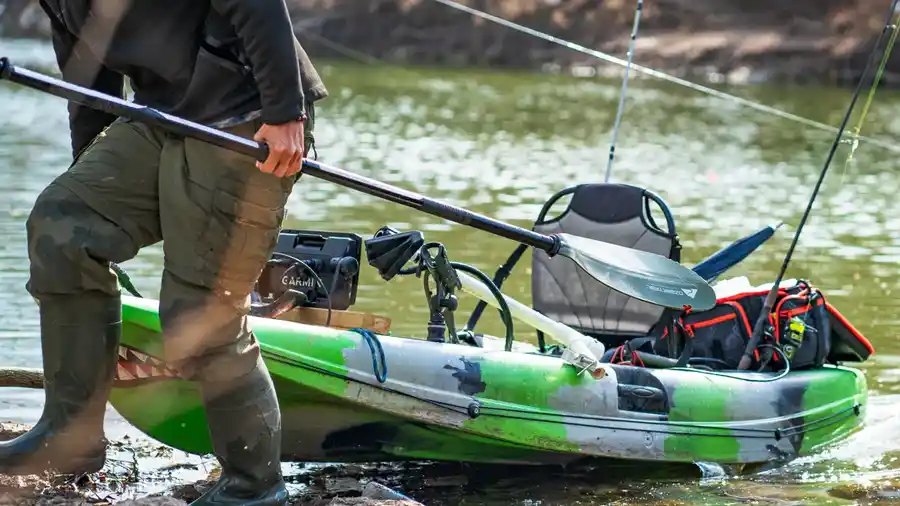
Mount kayak rod holders close to the seat and inside easy reach. Otherwise, the rod becomes a nuisance instead of gear you can actually use.
Start from where you sit. That’s the honest answer. A holder too far back makes you twist hard and can knock the rod against your seat or tankwell; too far forward, and your knees get crowded while fish landing turns clumsy.
The cleanest rule is simple: keep the holder within arm’s reach from your normal paddling position. It should sit high enough for the reel to clear the deck, but not so high that the rod tip snags every stroke. Usually, that lands beside the seat, a bit behind your hip, or on an accessory track near the cockpit. Not on the far back corner.
Use this first pass:
- Sit in the kayak on flat ground and hold your paddle.
- Reach to the side without leaning hard; mark the spot your hand can touch comfortably.
- Check that the rod butt and reel won’t hit the seat back, crate, or tankwell edge.
- Turn the paddle through a full stroke on both sides and watch for any contact.
- Move the mark until the rod stays clear of the blade path and stays reachable in one motion.
If you have to lean far over the gunwale, the mount is wrong. If your hand can’t grab the shaft cleanly, it’s wrong too.
How far from the seat is the right reach distance?
The right reach distance is the one you can hit without leaving the seat back. Need a full-body twist every time? Too far away.
Picture yourself low in the kayak, knees bent, feet braced, water moving. You want the rod close enough to drop into place in a second, not fumble for it while the boat drifts. That’s a reach problem, not a rod problem.
A good setup keeps the holder near the edge of your natural hand path. For many kayaks, that means beside the seat or just behind it, not halfway down the deck. The goal is to shorten the trip from hand to holder while keeping your upper body centered. Close-in placement also keeps your balance steadier and your gaze forward.
A quick way to judge reach:
- Sit in fishing position, not parked upright like on shore.
- Hold the paddle where your hands normally sit.
- Reach to where the holder would live.
- If your shoulder lifts or your back rounds, the holder is too far out or too low.
- If your elbow jams your seat or PFD, the holder is too close.
Seat height changes the answer. A high lawn-chair seat often makes side access easier, but a mount set too low can feel awkward. A low seat may keep the holder nearer the deck and reduce strain, yet it can make rod handles rub the boat more often. Set it for the seat you fish from, not the one in the catalog photo.
Where does rod holder placement help balance instead of hurting it?
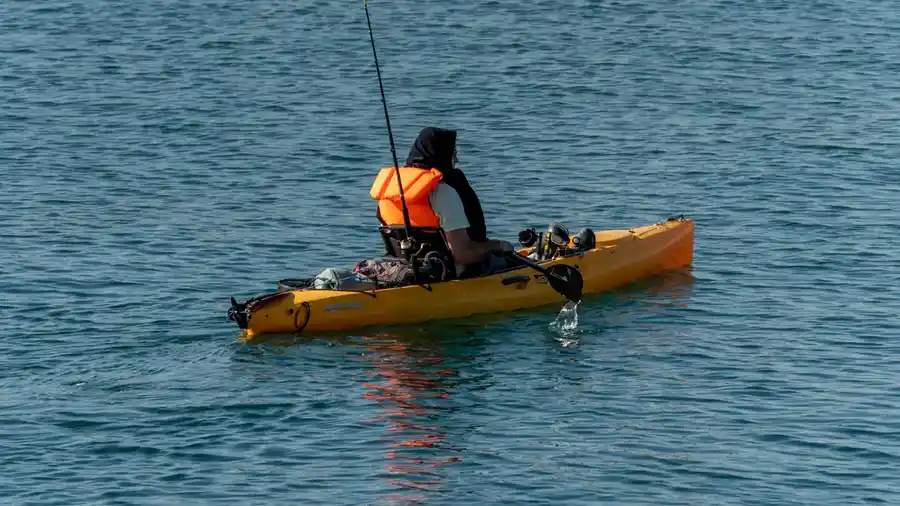
Rod holder placement helps balance when the weight stays near the kayak’s centerline and close to the seat. Anything much farther out starts acting like a little lever, and the kayak feels it.
Picture this: you’re loading gear for a long day, and the kayak already carries a paddle, crate, tackle, and a cooler or dry bag. Add a rod holder too far off one side and you create a small but real list that shows up when you sit still, turn, or reach for a fish. That math stops working fast.
Keep the holder close to the center if you want neutral handling. Side-mounted spots are fine when they sit near the seat and match your body position. Push a single holder far to port or starboard, and a narrow boat can feel lopsided almost immediately. Wider fishing kayaks forgive a bit more, but the rule does not go away.
Balance checks that actually matter:
- Does the rod weight sit close to your hips?
- Does the mount add bulk on only one side?
- Does the holder force your paddle hand to cross your body?
- Does the kayak still sit level when you are fully geared up?
Here’s the trade-off: a holder can feel easy to reach and still be badly placed if it creates side load you notice after an hour. So balance and access need to be judged together. A spot that feels fine on shore can become irritating on the water.
Right-handed placement, left-handed placement, and paddle stroke clearance
Right-handed placement usually works best on the side that does not interfere with your dominant paddle side, but the real test is paddle clearance. A rod holder in the blade path is a bad placement, full stop.
Picture this: you’re paddling on one side, then the other, and the rod holder sits exactly where the blade wants to enter the water. Clacking, snagging, and shortened strokes follow. Even a short holder can cause trouble if it sits too far forward or too high.
Right-handed anglers often like a holder on the right side for quick grabs, but that only works if the paddle stroke still clears the rod butt and reel. Left-handed anglers face the same problem in reverse. Side choice matters less than blade path and the way you fish from the seat. Cast from one side and paddle mostly on the other? Use that pattern to guide the mount.
Check clearance before you drill or clamp anything:
- Sweep the paddle through a normal forward stroke.
- Sweep it again with a slightly higher recovery.
- Simulate a brace or quick turn.
- Watch the reel, the rod butt, and the tip.
- Keep at least enough space that your knuckles and blade do not fight the same room.
On the flip side, some anglers put the holder behind the seat so both hands stay freer during the stroke. That can work well, but only if you can still reach the rod quickly and clear the seat back. If the rod rides too low behind you, it may also smack a crate or dry bag when you lean back. So the answer is not “right side” or “left side” by itself; it’s the side that clears your stroke and matches how you fish.
How do seat position, crate, and deck layout change the mount?
Seat position, crate size, and deck clutter decide where a holder can live more than the holder itself does. One kayak can accept a mount easily; another can turn the same spot into a headache because the seat, crate, and deck shape eat up the room.
Picture this: you’re trying to fit a rod holder on a kayak already packed with a crate, paddle leash, net, and tackle box. The obvious spot disappears fast. So placement should begin with the seated posture, then spread outward around the gear already on board.
If you use a crate behind the seat, a rear mount only makes sense when the holder clears the crate lid and leaves room to pull a rod straight up. A tall crate can block the rod butt or make the holder awkward to reach. A high seat frame changes the picture too, since the seat back can get in the way of both the handle and your elbow.
Use this order of checks:
- Place the seat in its normal fishing position.
- Set the crate or rear gear in its real spot.
- Mark where the rod holder can sit without touching either one.
- Check whether the rod can lift straight out, not sideways.
- Make sure the mount does not block your feet, knees, or landing net.
A holder sized for a bare kayak is often wrong once the boat is loaded. The deck layout decides the final answer. If the holder sits near a crate, let the crate dictate the opening angle. If it sits near the seat, let the seat back set the height. That keeps the rod usable instead of ornamental.
The most common mounting mistakes and what they cost you
The biggest mistakes are mounting too far back, too far outboard, or too low for your seat height. Those three errors cost access, clean paddle strokes, and balance in one shot.
Picture this: you’re fishing and the rod holder looks fine at the dock, but on the water every grab takes a twist, every stroke brushes plastic, and every stop starts feeling uneven. Lazy placement has a price.
Common mistakes are easy to spot once you know the signs:
- Too far behind the seat: hard to reach, slow to use, and more likely to interfere with a crate or stern gear.
- Too far out on the side: strains the shoulder and can make the kayak feel unbalanced.
- Too low: the reel and handle hit the deck or rub the kayak when you lift the rod.
- Too high: the rod sticks up and catches more paddle movement, branches, or wind.
- Wrong side for your habits: your dominant hand ends up crossing your body every time you grab the rod.
The fix is usually small, not dramatic. Move the mount a few inches closer to the seat, shift it inward, or raise it enough that the reel clears the surface. If your kayak has a gear track, use that to test positions before committing to a permanent spot. If it does not, mock the placement with tape and sit in the kayak twice before drilling. A few inches can matter more than a whole new mount.
A simple placement check before you drill or clamp anything
A good mount passes three checks: reach, clearance, and balance. Miss any one, and the placement needs another look.
Picture this: you’re on shore with the kayak on stands, and everything looks fine until you sit down and mimic a paddle stroke. Catch the problem then, not after holes are drilled.
Here is a quick placement routine that works on most kayaks:
- Sit in the kayak with your normal fishing seat height.
- Hold the paddle and move through several forward strokes.
- Mark a spot that your hand reaches without leaning hard.
- Check that the rod holder will not hit the seat back, crate, or your knees.
- Make sure the rod clears the paddle blade path on both sides.
- Compare the left and right sides if you are choosing between them.
- Choose the spot that keeps the rod close to the seat and out of the way.
That routine sounds plain because it is. Good placement is boring when it’s right. If you want more storage and handling ideas around the boat, the hub on rod storage and rod handling can fill in the bigger system around this choice.
The best part is that you do not need a perfect-looking location; you need one that lets you fish without fighting the boat. That is the whole game.
Should rod holders go behind the seat?
Usually, yes, if “behind the seat” still means close enough to reach without twisting hard. A spot just aft of the seat often works because it keeps the rod close and out of the paddle stroke. Trouble starts when “behind the seat” turns into “far behind the seat,” which slows access and may collide with a crate or rear gear.
How many rod holders should a kayak have?
Most kayaks need only as many rod holders as you can use without crowding the seat or paddle stroke. One or two well-placed holders are often easier to manage than several cramped mounts. More holders can make sense on a larger fishing kayak, but each one still has to earn its space.
Can rod holders block paddling?
Yes, rod holders can block paddling if they sit in the blade path or force a shorter stroke. That usually happens when the mount is too far forward, too high, or on the wrong side for your paddling style. If the paddle taps the rod every stroke, move the holder before you fish with it.
Sources
- American Canoe Association: https://americancanoe.org/
- U.S. Coast Guard Boating Safety Division: https://www.uscgboating.org/
Drafted with AI; not yet reviewed by a person.

2 thoughts on “Where to Mount Kayak Rod Holders for Balance and Access”