An anchor trolley and a drift chute solve different problems and usually work together rather than as a straight either/or choice. A trolley positions an anchor’s line along your kayak’s side; a drift chute slows wind-driven drift in open water. If you fish mostly open, windy water, a chute helps most. If you fish calm, sheltered water, the trolley and an anchor matter more. Many setups use both.
- A drift chute slows drift in wind — it doesn’t hold the kayak still the way an anchor does.
- An anchor trolley doesn’t anchor anything by itself; it manages the line so you can position and angle an anchor, or a drift chute, from the kayak’s side.
- Hobie’s own product description for its Drift Chute recommends pairing it with an anchor trolley system for easy deployment and retrieval.
- No manufacturer publishes a specific drift-reduction percentage or speed figure for a drift chute — treat any precise number you see elsewhere with caution.
- Use the checklist below to decide which to buy first based on the water you fish most, then add the other later if you need it.
What’s the Real Difference Between These Two?
An anchor trolley is a loop of line running through pulleys along the kayak’s side rail, with a clamp you can slide and lock anywhere along that loop. YakAttack’s LeverLoc Anchor Trolley is a real example: it includes a line clamp, two pulleys, 35 feet of paracord, and an anchor ring. The trolley itself holds nothing in place — it lets you run an anchor’s line to any point along the kayak’s side and change the pull angle without turning the whole boat.
A drift chute is a different tool built for a different problem. It’s a cone-shaped fabric chute you deploy in the water behind or beside the kayak. The Hobie Drift Chute is a workable example of the category: a weighted bottom section and a buoyant top section keep the cone open with its mouth facing the current, sitting just under the surface rather than popping up. It clips to an attachment point on the kayak and deploys on its own line, and Hobie’s own description recommends connecting it to an anchor trolley system for easier deployment and retrieval. In other words, the manufacturer itself treats the chute as something that typically works through a trolley, not as a trolley replacement.

Neither tool is an anchor. A trolley needs an anchor attached to actually hold the kayak in place; a drift chute only slows movement, it doesn’t stop it. That distinction matters when you’re deciding what to buy first. For the companion comparison of an anchor trolley against a stake-out pole for shallow spots, see anchor trolley vs. stake-out pole, and for a wider view of how all your accessories fit together, see the kayak fishing accessories buying guide.
Which Should You Buy First? A Checklist by Water Type
Match your main fishing water to the table below. This isn’t a universal ranking — each water type has a different problem, and each tool solves one of them, not both.
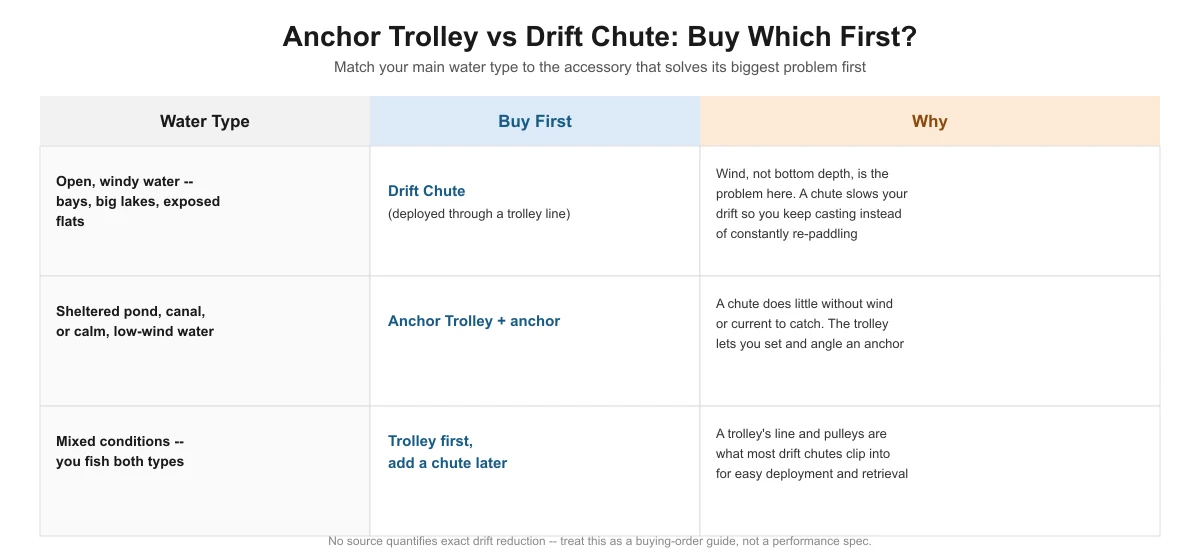
| Water Type | Buy First | Why |
|---|---|---|
| Open, windy water — bays, big lakes, exposed flats | Drift Chute (deployed through a trolley line) | Wind, not bottom depth, is the problem here. A chute slows your drift so you keep casting instead of constantly re-paddling back into position. |
| Sheltered pond, canal, or calm, low-wind water | Anchor Trolley + anchor | A chute does little without wind or current to catch. The trolley lets you set and angle an anchor, which is what actually holds you still here. |
| Mixed conditions — you fish both types regularly | Trolley first, add a chute later | A trolley’s line and pulleys are what most drift chutes clip into for easy deployment and retrieval, so it’s the more foundational purchase. |
The mixed-conditions row is the practical answer for most anglers: since Hobie’s own instructions point toward running a drift chute through a trolley system, buying the trolley first sets you up to add a chute later without having to retrofit anything.
How Do the Two Combine?
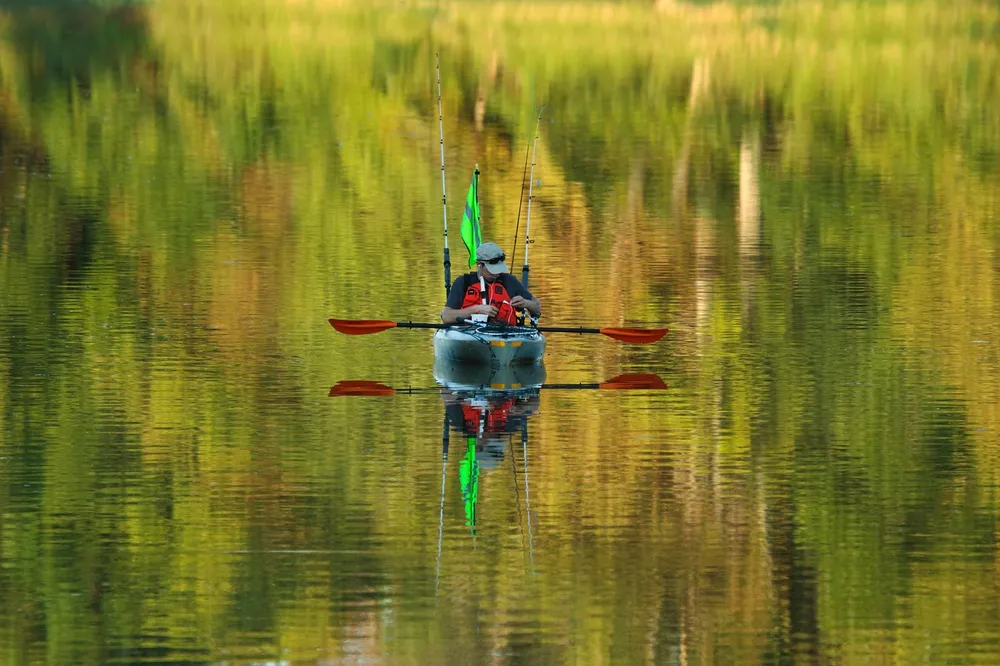
A drift chute doesn’t replace an anchor trolley; it typically runs through one. Hobie’s product description for its own Drift Chute explicitly recommends connecting it to an anchor trolley system for easier deployment and retrieval, rather than clipping it to a single fixed point. That’s a meaningful detail: it means the trolley isn’t just useful for anchoring, it’s also the deployment hardware many drift chutes are designed around.
In practice, this means an angler who already owns a trolley for anchor work can add a drift chute to the same hardware for windy days, rather than buying a completely separate mounting system. The combination covers more conditions than either tool alone — the trolley-and-anchor setup for calm water, and the trolley-and-chute setup for wind.
What Else Matters Before You Buy?
- Don’t expect a specific drift-reduction number. No manufacturer publishes a percentage or speed figure for how much a drift chute slows a kayak, including for the Hobie model referenced above (its specs here come from a retailer listing, since Hobie’s own site did not show a dedicated current product page for it at the time of research). Treat any precise percentage claim you see elsewhere as unverified.
- Check current availability before you shop. Specific drift-chute models come and go from manufacturer catalogs over time, so confirm a given product is still sold before building a buying plan around it.
- Match trolley hardware to your kayak’s track system. Since a chute typically clips through the same trolley line as your anchor, make sure the trolley’s pulleys and clamp are compatible with your kayak’s existing rail or track before buying either piece.
- An anchor is a separate purchase either way. A trolley manages line, not weight — you’ll need an actual anchor to pair with it regardless of whether you also add a drift chute.
Frequently Asked Questions
Does a drift chute replace an anchor trolley?
No. A drift chute only slows drift in wind; it doesn’t hold the kayak in place the way an anchor does. An anchor trolley is a separate line-management system, and Hobie’s own instructions for its Drift Chute recommend deploying it through a trolley rather than using it alone.
Can I use a drift chute without an anchor trolley?
The Hobie Drift Chute clips to any attachment point on a kayak, so a trolley isn’t strictly required. But the manufacturer recommends pairing it with a trolley system specifically because that makes deployment and retrieval easier.
How much does a drift chute actually slow a kayak down?
No manufacturer gives a specific percentage or speed figure for this, including for the Hobie Drift Chute referenced above. Treat it as a tool that meaningfully reduces drift in wind, not as something with a precisely quantified performance spec.
Is a drift chute heavy or hard to store?
Not typically. The Hobie Drift Chute weighs about 18 ounces and is designed to collapse for storage when not deployed, based on the retailer listing used for this article’s research.
Which should a beginner buy first, a trolley or a chute?
Most anglers get more use out of an anchor trolley first, since it’s the hardware most drift chutes are designed to clip into anyway, and it’s useful on its own with a basic anchor even before adding a chute.
Sources
- YakAttack, LeverLoc Anchor Trolley (AMS-1003) product page (trolley function, kit contents, line length)
- Outdoor Play, Hobie Drift Chute product listing (weight, deployment description, and the manufacturer’s recommendation to pair with an anchor trolley; cited via this retailer listing since Hobie’s own site did not show a current dedicated product page during research)
By kayakfishingaccessories.net Editorial Team. Last updated: November 13, 2026.






One thought on “Anchor Trolley vs Drift Chute for Kayak Fishing”